
Search Connecticut Civil Court Records
Connecticut civil court records include all case files, dockets, and legal documents from Superior Courts across the state. The Connecticut Judicial Branch maintains these records and offers online search tools for the public. You can look up civil cases by name, docket number, or attorney at any time. Most records are open to all. The system lets you search from home or visit courthouses in person to get copies of court filings and judgments.
Connecticut Civil Court Records Overview
Online Civil Case Search
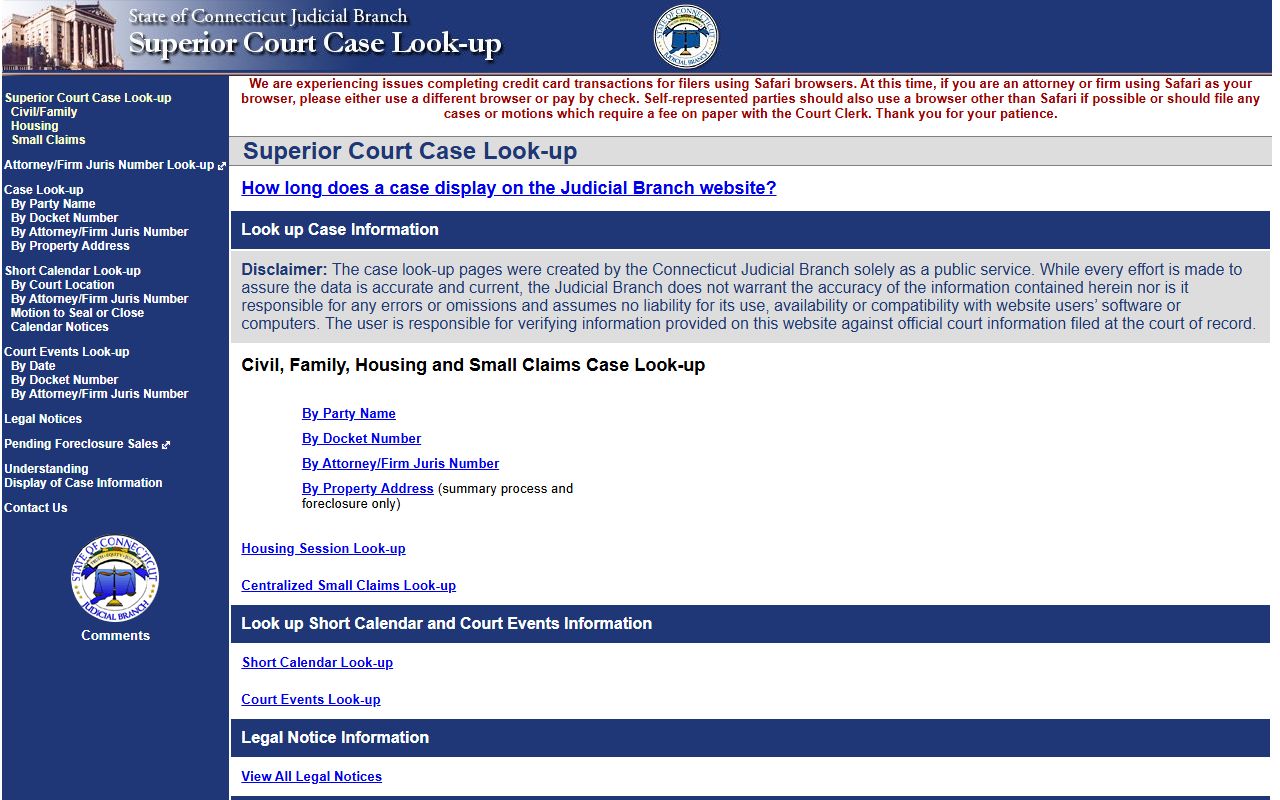
Connecticut offers free online access to civil court records through the Judicial Branch website. The Civil Case Look-up system covers all Superior Courts in the state. You can search by party name, docket number, or attorney name. The system shows case details, court dates, and docket entries for civil, family, housing, and small claims matters. This tool works for any case filed in Connecticut.
The Judicial Branch Case Look-up Portal is your starting point for all civil record searches in Connecticut. It links to different search tools based on case type. Civil cases go through one system. Housing cases use another. Small claims have their own search tool. All are free to use and open to the public.
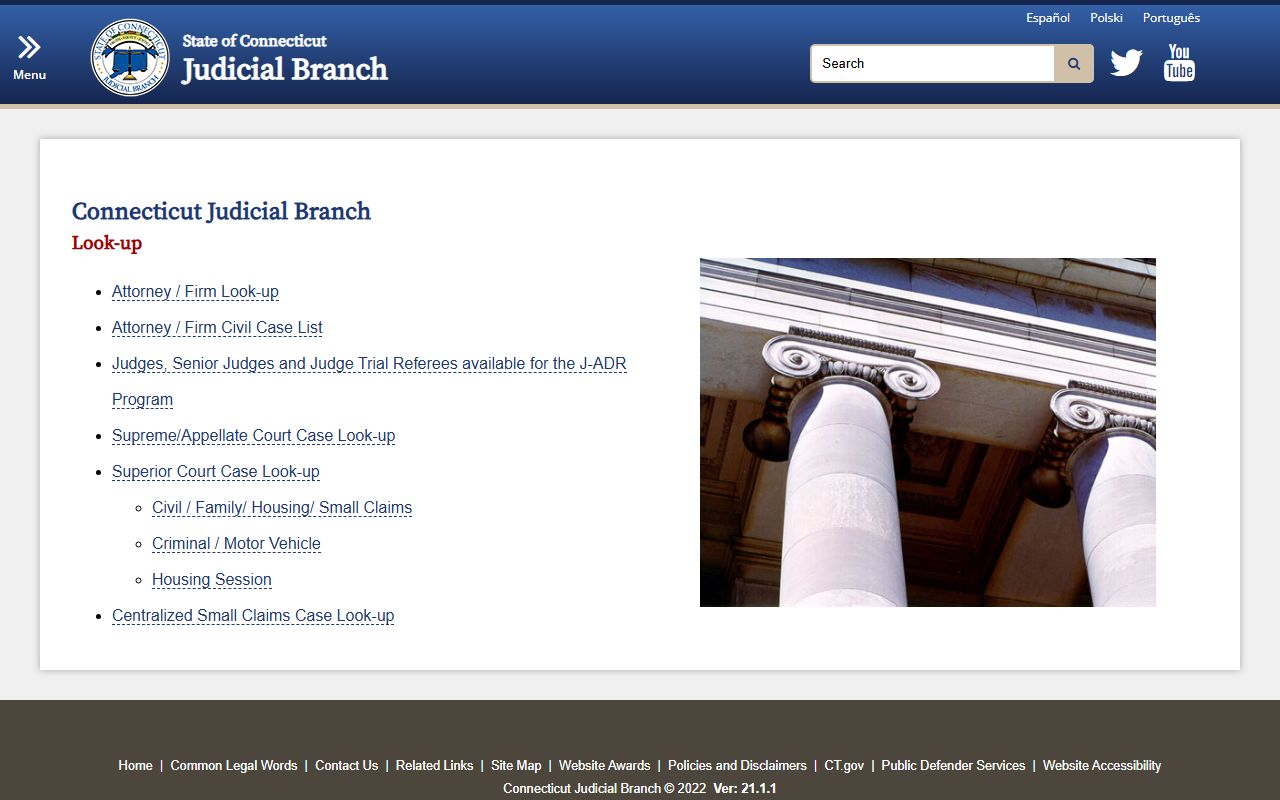
To search civil records online, you need at least one of these items: the full name of a party in the case, the case docket number, or the name of an attorney involved. The system returns case details right away. You can see when the case was filed, what court it is in, and the current status. Most searches take less than a minute to run in Connecticut.
Note: Some older cases may not appear in the online system and require an in-person visit to the courthouse.
Connecticut Court System
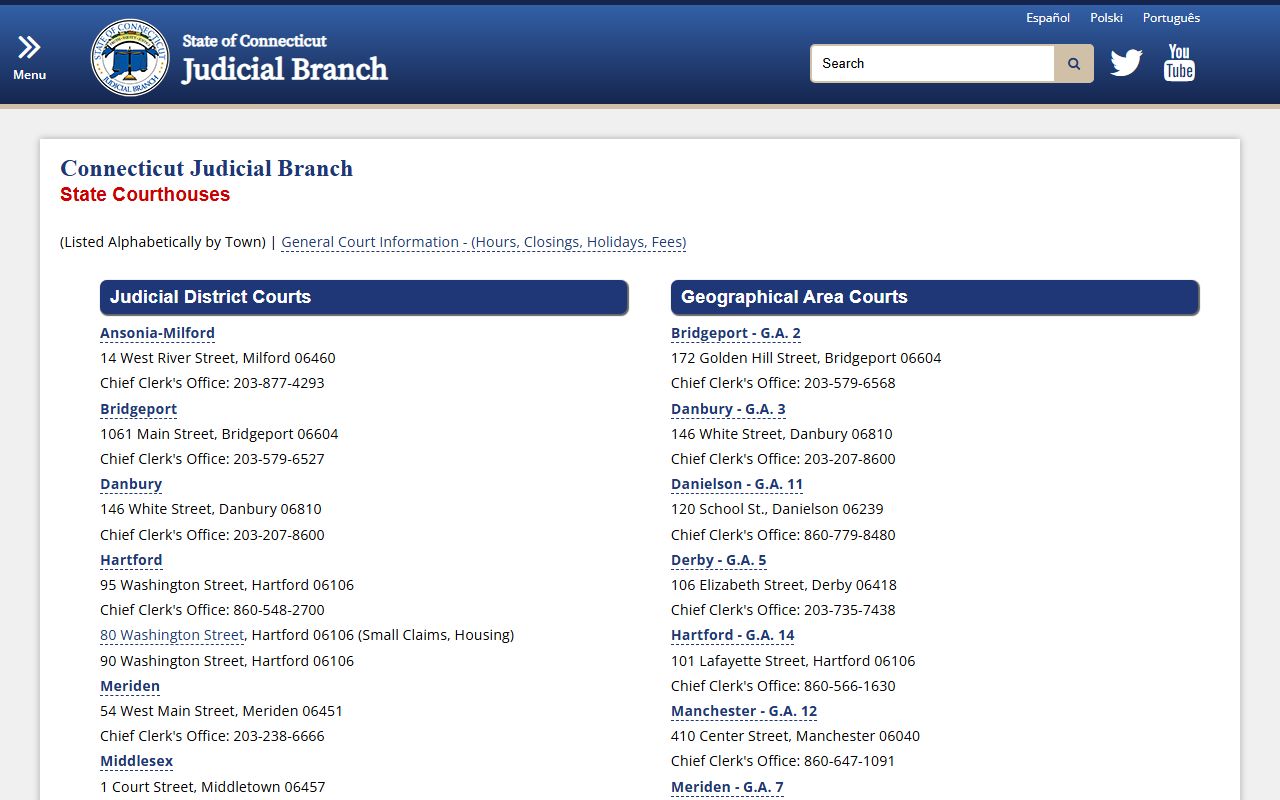
Connecticut has a unified court system run by the state Judicial Branch. The Superior Court handles all civil cases. There are 14 Judicial Districts spread across eight counties. Some districts have more than one courthouse location. Hartford, Bridgeport, New Haven, Stamford, Waterbury, and other cities host major court facilities in Connecticut.
Superior Court hears cases involving contracts, property, personal injury, and other civil matters. Connecticut General Statutes Chapter 51 sets up the court system and defines how it works. The Judicial Branch website at jud.ct.gov has info on all court locations, hours, and contact details for each district in Connecticut. Each courthouse has a clerk's office that keeps civil case files and helps the public access records.
Civil court records in Connecticut include the complaint, answer, motions, court orders, and final judgments. These documents tell the full story of a case from start to finish. The clerk's office stores all filings. You can ask for copies at any courthouse or view some records online through the case search system.
Court Service Centers
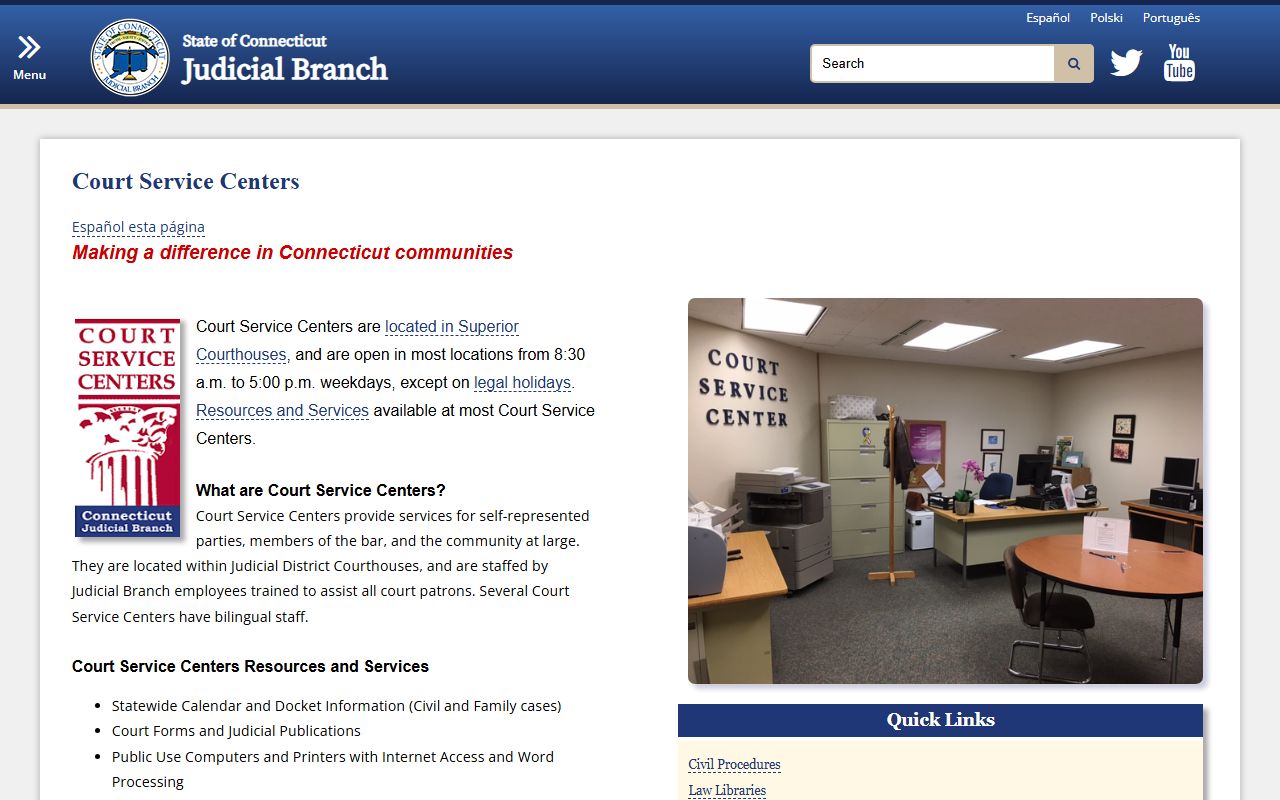
Court Service Centers are located in most Superior Court buildings across Connecticut. These centers help people who represent themselves in court. Staff can answer questions about civil case procedures. They offer access to forms, computers, printers, and other tools. You can also get help with e-filing and docket lookups at these centers.
The Court Service Centers are open from 8:30 a.m. to 5:00 p.m. on weekdays in most locations. Some have bilingual staff. Services include statewide docket info for civil and family cases, notary public services, and access to court forms. You can email questions to Court.ServiceCenter@jud.ct.gov or call the manager at 203-965-5288 for more help in Connecticut.
These centers are free to use. They give self-represented parties the same resources that lawyers have. If you need to file a civil case or respond to one, a Court Service Center can guide you through the process in Connecticut.
Types of Civil Court Cases
Civil cases in Connecticut cover many types of legal disputes. Contract cases involve broken agreements between people or businesses. Property disputes deal with land, boundaries, or ownership rights. Personal injury cases seek money for harm caused by someone else. Landlord-tenant cases go through housing court. Small claims handle disputes under $5,000, or up to $15,000 for home improvement contracts.
Family court deals with divorce, custody, and child support. These are civil matters but use separate forms and procedures. Housing session covers evictions, rent issues, and housing code violations. All of these case types create public records that you can search and view in Connecticut. Each type has its own forms and filing rules set by the Judicial Branch.
Civil cases typically contain these records:
- Complaint filed by the plaintiff
- Summons to notify the defendant
- Answer or response from the defendant
- Motions filed by either party
- Court orders and rulings
- Final judgment or settlement
You can get copies of any document in a civil case file from the courthouse clerk's office. Some documents are also viewable online through the case search system in Connecticut.
How to Get Court Records
There are several ways to obtain civil court records in Connecticut. For active cases, use the online case lookup system to see docket entries and case status. For disposed cases, you need to request files from the Superior Court Records Center. Email your request to SuperiorCourtRecordsCenter@jud.ct.gov or call the Centralized Services Unit at 860-263-2750.
All requests must include the case name and docket number. You can find the docket number online using the case look-up function. Files are usually ready within one or two business days. You can get the records by email at no charge if the file size is small. You can also pick them up at any court location or at the Centralized Services Unit. Copy and certification charges may apply depending on how you get the records in Connecticut.
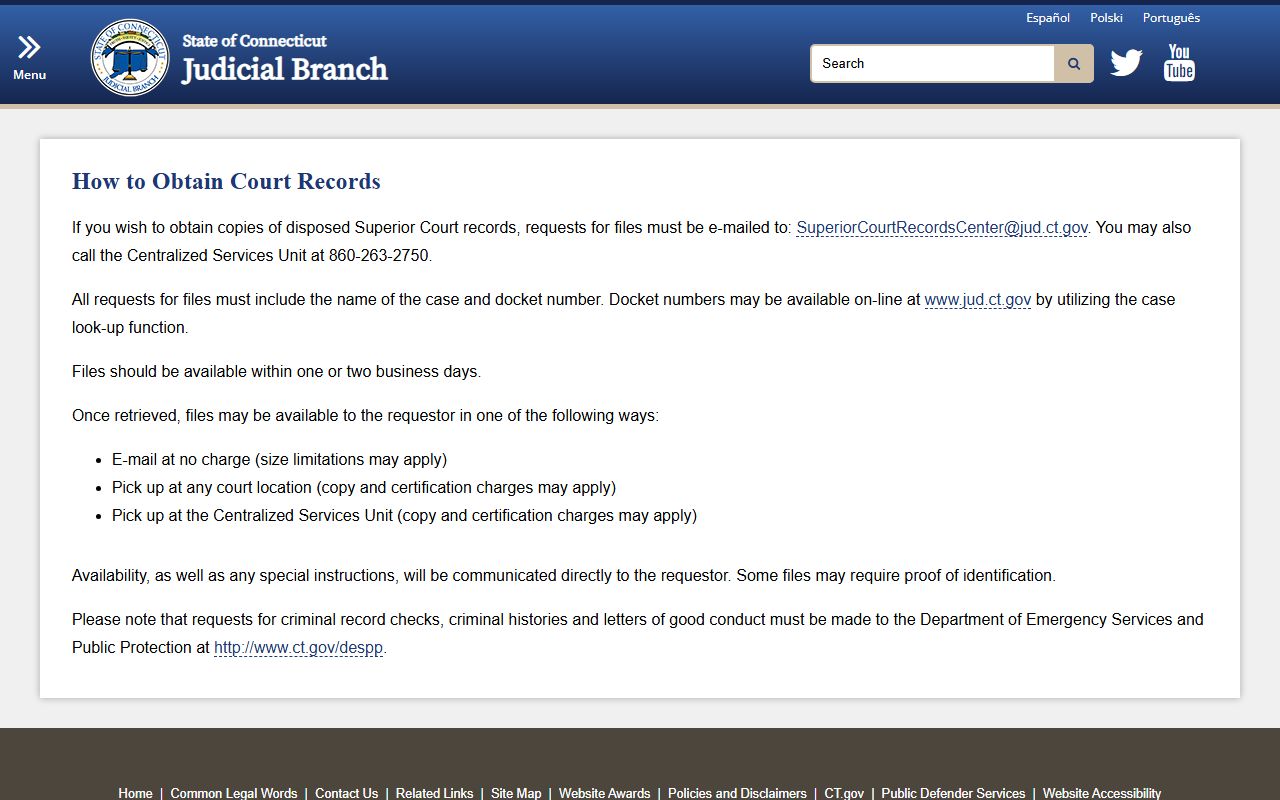
Some files may need proof of ID. Criminal record checks and letters of good conduct must go through the Department of Emergency Services and Public Protection at ct.gov/despp, not the Judicial Branch. Civil court records follow different access rules than criminal records in Connecticut.
Note: Files are emailed free if size allows, but printed copies cost $1.00 per page for court documents.
Civil Court Forms
The Connecticut Judicial Branch offers all official court forms online. Visit the Court Forms Directory to find forms for civil cases. Forms are sorted by category: civil, family, housing, small claims, and more. You can also search by form name, number, or keyword. The site has forms in several languages including Spanish, Polish, Portuguese, and Chinese.
Three electronic options are now available for accessing forms in Connecticut. You can download and fill them out by hand, type into them on your computer, or use the e-filing system to submit them online. Each form has instructions that explain how to fill it out and where to file it. The forms are free to download and use.
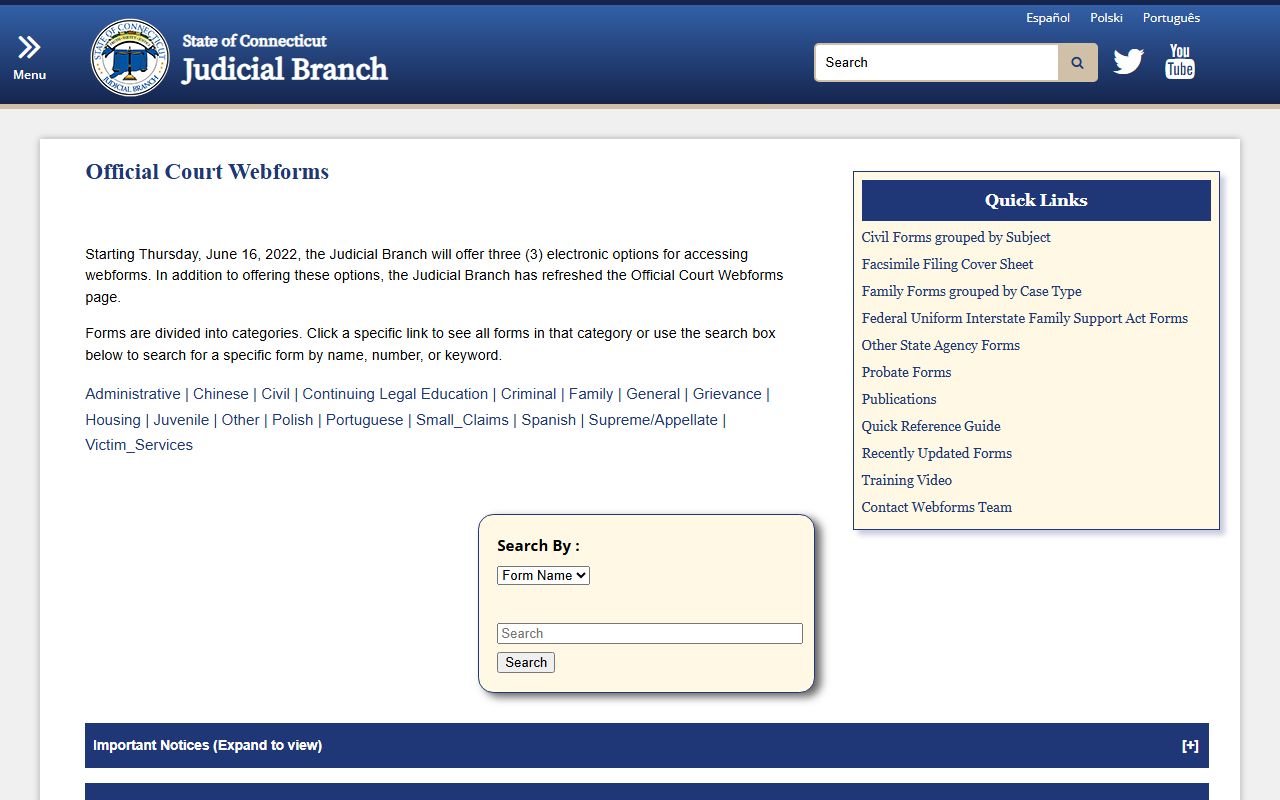
Common civil forms include the complaint form, summons, answer, and motion forms. If you are filing a small claims case, there are separate forms for that. Housing cases also use their own set of forms. All forms follow Connecticut Practice Book rules and court procedures.
Public Access to Court Records
Connecticut law gives the public broad access to court records. The Freedom of Information Act, found in Connecticut General Statutes Chapter 14, Sections 1-200 to 1-241, makes most records open. CGS 1-210 says all records kept by public agencies must be available for inspection and copying unless a law restricts access. Court records fall under this rule.
Civil case files are generally open unless sealed by court order. Docket sheets are open unless the case is confidential. Dispositions are available as soon as the court processes them. Information on the computer screen may be given over the phone. Other material must be viewed at the clerk's office. The Court Records FAQs page explains what is open and what is restricted in Connecticut.
Some records have limits. Juror questionnaires are confidential under CGS 51-232(c). Juvenile records are closed under CGS 46b-124 with specific exceptions. Sealed records require a court order to access. But most civil court records in Connecticut are open to anyone who asks. You do not need to be a party to the case or give a reason for your request.
Copy charges are set by law. Court records cost $1.00 per page. Administrative records cost $0.25 per page. Transcript charges vary based on the type of request. The Freedom of Information Commission at portal.ct.gov/foi enforces access rights if an agency denies your request in Connecticut.
Record Searches and Information
The Judicial Branch provides tools and resources for civil case research. You can search by party name, case number, or attorney. Attorney and firm lookups are available at jud.ct.gov/attorneyfirminquiry. This shows all cases where a specific lawyer or law firm appeared in Connecticut courts.
Statistical data on Superior Court cases is available from the Superior Court Operations Division. Call 860-263-2734 x3039 to request case statistics or reports. The Judicial Branch publishes annual reports with data on case filings, dispositions, and court activity across all districts in Connecticut. These reports are public and help track trends in civil litigation.
For general info about the Judicial Branch, its programs, or policies, contact the External Affairs Division at 860-757-2270. For help with a specific case or record request, contact the clerk's office in the judicial district where the case was filed. Each district has its own contact info listed on the Courthouse Directory page.
Legal Help for Civil Cases
If you need help with a civil case in Connecticut, several resources are available. Statewide Legal Services provides free legal assistance to low-income residents. They handle civil matters including housing, family law, and consumer issues. The Connecticut Bar Association offers a lawyer referral service to connect you with an attorney in your area who handles civil cases.
Self-help resources are available online through the Judicial Branch website. You can find guides on how to file a civil case, respond to a lawsuit, or handle small claims court. The Court Service Centers offer in-person help with forms and procedures. Many courthouses also have law libraries open to the public where you can research legal issues and review Connecticut statutes.
For people who cannot afford to pay court fees, Connecticut law allows fee waivers in some cases. You must file an application for waiver of fees and show proof of your income. The court decides if you qualify. This helps make sure everyone has access to the civil court system in Connecticut regardless of their ability to pay.
Connecticut Civil Records by County
Each county in Connecticut has Superior Court locations that maintain civil case records. Select a county below to find court contact information and local resources.
Civil Records in Major Cities
Residents of Connecticut cities access civil court records through their local Superior Court. Browse major cities below for courthouse locations and civil case information.